
Self-Levelling Screed in Cape Town
The fastest way to level an uneven floor in Cape Town. Professional self-levelling screed installation, residential renovations, commercial fit-outs and new builds across the Western Cape.
Free Site Visit * No Obligation Quote
Workmanship guarantee on every job
Serving all of Cape Town & Western Cape
10+ years of installation experience
Free site visit — available this week
What is self-levelling screed?
Self-levelling screed is a poured compound that flows across an uneven floor and finds its own level. You pour it, guide it to the edges and let gravity do the work. Within 24 to 48 hours, you have a flat, smooth surface ready for tiling, vinyl, epoxy, laminate or any other floor covering.
Most Cape Town homeowners and contractors encounter self-levelling screed during renovation projects. An old floor that needs re-levelling before new tiles go down. A damaged screed that has been partially removed and left an uneven surface. A new build where the concrete slab has cured with minor undulations that would crack tiles if left untreated. A bathroom where the fall-to-drain needs correcting before waterproofing begins.
In all of these situations, traditional sand and cement screed would take 28 days to cure before the next trade could come in. Self-levelling screed does not. That speed difference is often what determines whether a Cape Town renovation runs on schedule or runs three weeks over.
Self-levelling screed vs sand and cement screed
This is the question we get asked most often. Here is a straightforward guide.
Choose self-levelling screed when:
- You need the floor ready for the next trade within 24–48 hours
- The overlay thickness is 3 to 15mm — thin applications over an existing substrate
- You are levelling a renovation project with an existing base that is mostly sound
- You are applying screed over existing tiles, old screed or damaged concrete
- The substrate has minor undulations but is structurally sound
- The project is a bathroom, kitchen or residential room rather than a large industrial floor
- You are working in winter in Cape Town — self-levelling performs better in cold, damp conditions than sand and cement
Choose sand and cement screed when:
- The application needs to be 25mm or more thick — full depth screed over a structural slab
- You are screeding a new build from raw concrete across a large area
- Time is not the primary constraint — 28-day curing is acceptable in the project programme
- The project is a warehouse, factory or large commercial floor requiring a heavyweight system
- You need a structural screed rather than a levelling overlay
Not sure which applies to your project? We will advise during the free site visit; we look at the existing substrate, measure the level variation and recommend the correct system for your specific job.
See our full screed flooring service
Where we install self-levelling screed in Cape Town
Screed is not one thing. The right type depends on your project, your timeline, your substrate and your final finish. Here is a plain guide to each.
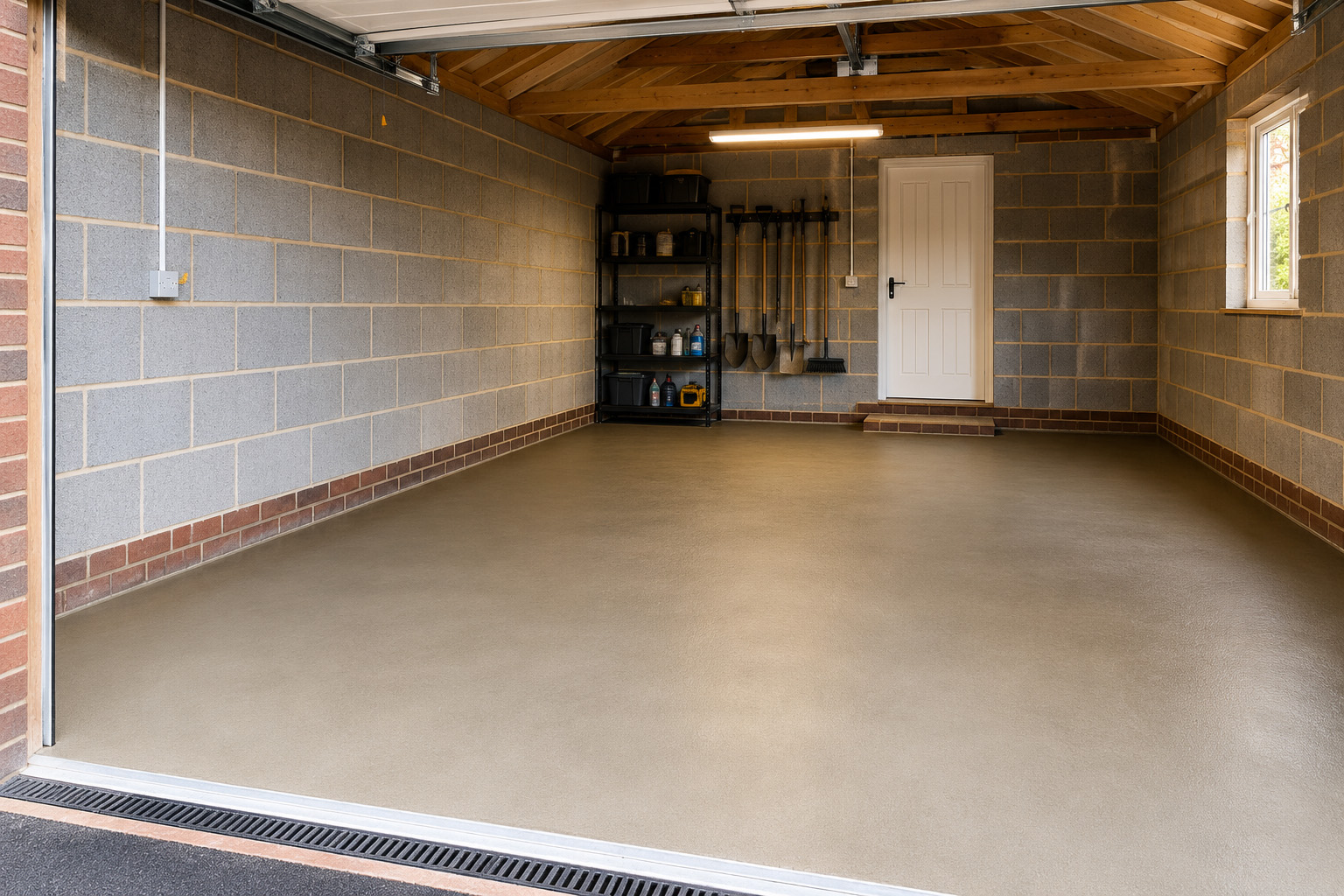
Residential renovations
The most common use case in Cape Town. You lift old tiles or remove damaged screed, and find an uneven concrete base beneath. Tiling directly onto this will crack the tiles at the weakest points. A self-levelling screed overlay brings the surface to within ±3mm flatness tolerance across the full room; the result is a base that tiles bond to correctly and remain flat for years.
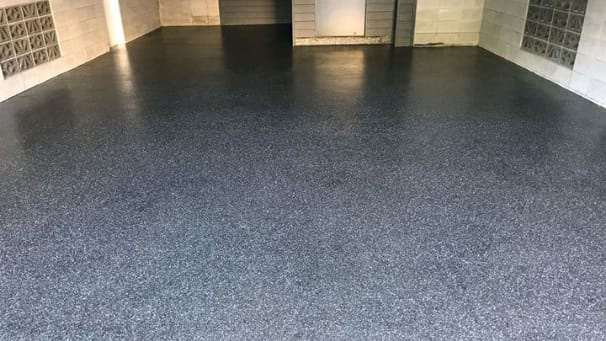
Bathroom and wet room re-levelling
Bathrooms are especially important to level correctly. Waterproofing and tile adhesive both require a flat, even substrate to perform properly. A slight variation in the floor surface creates stress points in the tile adhesive over time and can compromise the waterproofing layer at the joins. Self-levelling screed brings the bathroom floor to the correct flatness before any waterproofing layer is applied. We also correct drainage falls at this stage where required.
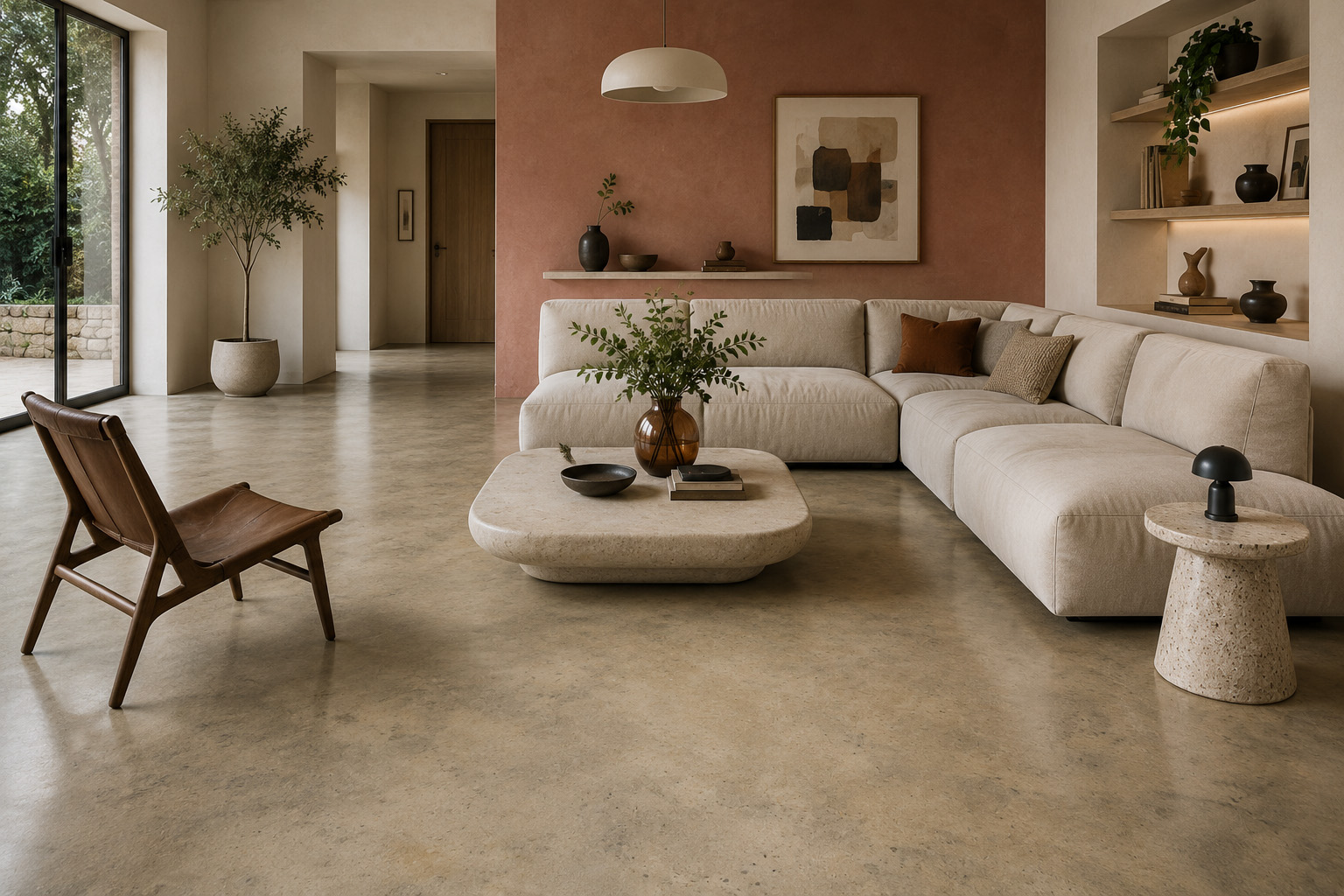
Levelling over existing tiles
One of the most time-saving applications. If your existing tiles are firmly bonded, level and in good condition, you do not always need to remove them. We prime the tile surface with the correct bonding primer and apply self-levelling screed as a thin overlay, bringing the floor to the correct height and providing a fresh, flat surface for the new floor covering. This eliminates demolition costs and the disruption of tile removal.
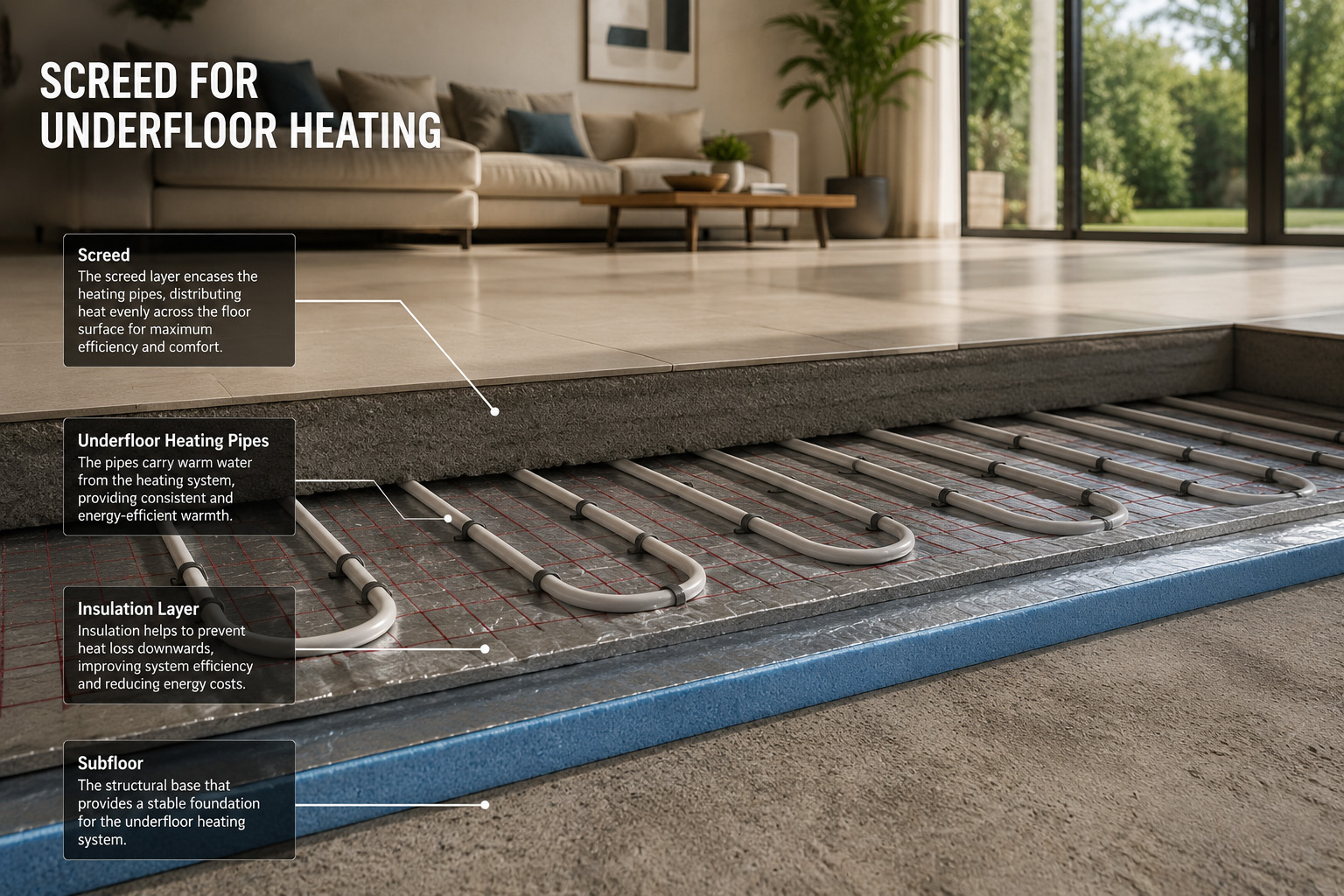
Commercial and retail fit-outs
Commercial fit-outs in Cape Town run to tight schedules. A retail space in the Cavendish or V&A precinct cannot wait 28 days for screed to cure before the flooring contractor comes in. Self-levelling screed is the standard solution for commercial levelling because it respects the programme. We pour on Monday, and the floor is ready for vinyl, epoxy or polished concrete by Wednesday.
New build slab levelling
Even new build slabs often have surface variations that exceed the tolerance for direct tiling. A 3 to 8mm self-levelling overlay over the structural slab gives tilers and floor coverers the flat surface they need without the month-long wait of a full sand and cement screed. Popular in new build estates in Durbanville, Somerset West and Century City where construction programmes are tight.
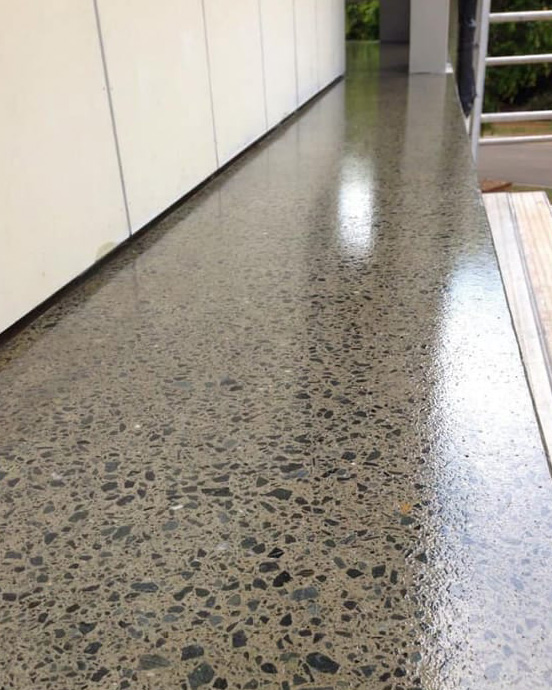
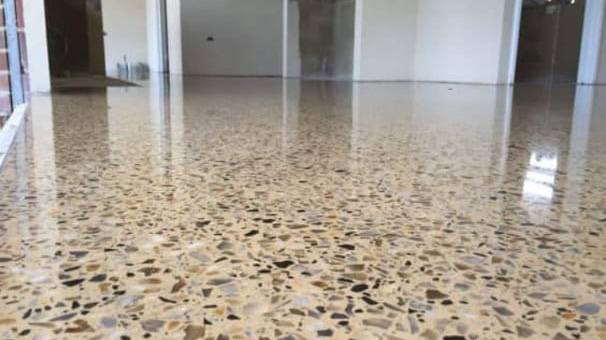
Why Cape Town homeowners and contractors choose Solid Tech for self-levelling screed
We are professional installers
We are a professional installation company. We assess your substrate, specify the correct product, prepare the surface correctly and install to a stated flatness tolerance. That is a different service from buying bags of compound and doing it yourself, and it is the service most homeowners and building contractors actually need.
We prepare every substrate before we pour
The quality of the preparation determines the quality of the result. A self-levelling compound poured onto an unprimed, contaminated or unstable surface will delaminate within months. We grind, clean, prime and seal every substrate before a single drop of compound goes down. This is non-negotiable on every job, and it is the step that the DIY guides and the Gumtree tradespeople consistently skip.
We work to a flatness tolerance
We specify a ±3mm flatness tolerance across the full surface of every self-levelling screed installation. Your tiling contractor, vinyl installer or epoxy team will have a consistent, predictable surface to work on. We confirm this in the written handover at the end of every job.
Written guarantee on every installation
If the screed delaminates, cracks excessively or fails to achieve the specified flatness due to our installation, we come back and fix it. That guarantee is in writing on every job agreement.
What to expect
How we install self-levelling screed in Cape Town
Self-levelling screed sounds simple. It is not always. The preparation stage determines whether the compound bonds and cures correctly or whether it lifts, cracks and fails. Here is how we do it.
01
Free site visit and level assessment
We come to your Cape Town property, assess the existing substrate concrete, old screed, tiles, or check level variation across the surface and confirm the correct product and thickness for your project. We check for any loose, hollow or failing areas that need to be addressed before the self-levelling compound is poured. You receive a written quote on the day.
02
Substrate preparation and priming
This is the step that determines whether the job succeeds or fails. Every surface that self-levelling screed is applied to must be clean, dust-free, structurally sound and primed with the correct bonding primer. For Cape Town’s renovation projects where old adhesive residue, tile grout or paint is present, we grind or scabble the surface to create a clean, open substrate. The primer is applied and allowed to tack; this is the chemical bond that stops the self-levelling compound from delaminating.
03
Perimeter sealing
We seal the perimeter of the room with foam strip to prevent the compound from running under doors, into wall cavities or across expansion joints. This step is often skipped by inexperienced installers; it causes the compound to flow into areas it should not reach and creates thin, weak edges at doorways and skirtings.
04
Mixing and pouring
The self-levelling compound is mixed to the correct consistency not too thick, not too watery and poured onto the primed surface. We work across the floor from one end to the other, guiding the compound to the perimeter and breaking any surface bubbles with a spiked roller. The compound flows to find its own level while we ensure full coverage to the edges. For larger areas, we work in bays.
05
Final inspection and handover
Self-levelling screed is typically walkable in 3 to 4 hours. It is ready for tiling, vinyl or other floor coverings within 24 to 48 hours depending on the product and ambient conditions. In Cape Town’s cold, damp winters, curing may take slightly longer; we advise on the specific timeline for your installation before we start. We do a final flatness check before handover and confirm the recommended wait time before the next trade moves in.
Self-levelling screed installation across Cape Town and the Western Cape
We install self-levelling screed across the greater Cape Town metro and Western Cape, for residential renovations, new builds, bathrooms and commercial fit-outs.
Areas we serve:
Constantia
Atlantic Seaboard
Camps Bay
Sea Point
Hout Bay
Century City
Claremont
Kenilworth
Newlands
Rondebosch
Bergvliet
Plumstead
Wynberg
Bellville
Durbanville
Brackenfell
Bloubergstrand
Table View
Milnerton
Goodwood
Pinelands
Stellenbosch
Somerset West
Paarl
Don’t see your area? Get in touch; we cover more of the Western Cape than we can list here.
Common Questions on Self-levelling screed in Cape Town
How quickly can I tile or lay vinyl after self-levelling screed?
Most self-levelling screed products allow tiling or vinyl installation within 24 to 48 hours of application. You can walk on the surface in 3 to 4 hours. In Cape Town’s cold, wet winter conditions, curing may take slightly longer; cold temperatures slow the chemical reaction. We advise on the specific wait time for your installation at handover and provide this in writing.
Can self-levelling screed be applied over existing tiles?
Yes, if the existing tiles are firmly bonded, structurally sound and free of loose or hollow areas. The tile surface must be prepared with the correct bonding primer before the self-levelling compound is applied. Loose, cracked or hollow tiles must be removed first. This approach eliminates demolition costs and is ideal for renovation projects where the existing tile base is sound. We confirm suitability during the free site visit.
What is the maximum thickness for self-levelling screed?
Most standard self-levelling screed products can be applied up to 10–15mm in a single pour. For variations larger than this, multiple pours with intermediate curing periods between them are required. If the level variation exceeds 20–25mm, sand and cement screed or a combination approach is usually more appropriate. We assess the level variation during the free site visit and recommend the correct solution.
Is self-levelling screed suitable for Cape Town’s wet winters?
Yes, and it often performs better than sand and cement screed in cold, damp winter conditions. Self-levelling screed cures through a chemical reaction rather than simple drying, which means it is less susceptible to the moisture interference that can affect sand and cement mixes in Cape Town’s winter. Curing times may extend slightly in very cold conditions, but the bond quality is not compromised in the way that sand and cement can be. We factor Cape Town’s seasonal conditions into every installation schedule.
How flat does self-levelling screed get?
A professionally installed self-levelling screed achieves ±3mm flatness tolerance across the floor surface. This is the standard tolerance required by most tiling and flooring contractors for adhesive bond integrity. Standard DIY application typically achieves ±5–8mm, which is adequate for vinyl and laminate but can be insufficient for rigid tiles on large formats. We state and deliver ±3mm on every professional installation.
Can self-levelling screed be used as a finished floor?
Standard self-levelling screed is a preparation product; it creates the base for tiles, vinyl, epoxy or other floor coverings. It is not designed to be a finished floor in its raw state. If you want a seamless, pigmented screed as a finished floor, that is a different product: colour or decorative screed, which we also install.
See our colour screed flooring service
