Screed Flooring in Rondebosch
Upgrade living spaces, kitchens, patios, entertainment areas, and heritage homes with screed flooring designed for Rondebosch’s character properties, wet winters, and modern family living.
Free Site Visit * No Obligation Quote
Workmanship guarantee on every job
Serving all of Cape Town & Western Cape
10+ years of installation experience
Free site visit — available this week
Screed Flooring for Rondebosch
Rondebosch is steeped in history. The buildings have a very strong Victorian influence, and those Victorian homes are precisely what makes property here some of the most sought-after in the Southern Suburbs. Heritage properties in Rondebosch, particularly on Silwood Road and through Rondebosch Village, have achieved record prices when sympathetically restored; one recently sold for R15.3 million. The suburb’s appeal is built on that heritage stock, and buyers here pay precisely because the architecture is original and well-preserved.
For screed flooring, that heritage brings a specific set of challenges. Victorian, Edwardian and mock Tudor homes in Rondebosch were built between the 1880s and 1930s on concrete slabs that have been tiled, painted and repaired across multiple generations. The Liesbeek River corridor, which Rondebosch shares with neighbouring Newlands, means moisture levels in older slabs here can be elevated, particularly in lower-floor rooms and properties close to the river.
The suburb also has a significant rental dimension. UCT’s main campus is at the top of the suburb, and a substantial portion of Rondebosch properties are held as student accommodation and long-term rentals. For landlords, screed floors that withstand high tenancy turnover without tile maintenance costs are a straightforward investment.
At Solid Tech Flooring, we install screed in Rondebosch across both markets: heritage renovation and rental stock. Free site visit, written quote, same week in most cases.
The right screed for your Rondebosch property
Screed repair and overlay
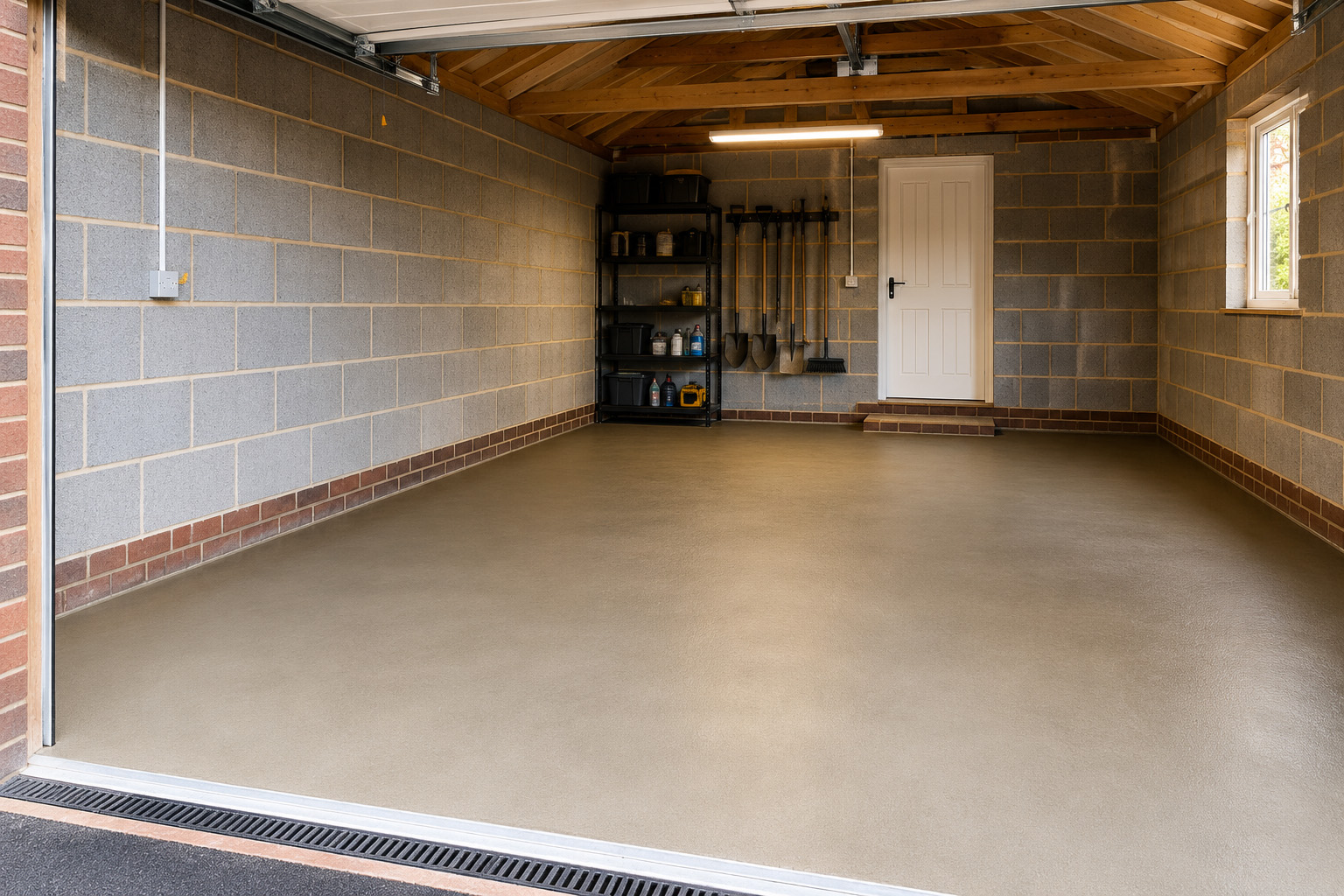
Many Rondebosch homes have existing screed installed years ago without a moisture test. The result is delamination: a floor that sounds hollow when tapped and cracks at the surface over time. We diagnose the cause before recommending a repair or replacement. In most cases, a moisture-treated overlay is more cost-effective than full removal.
See our screed repair service
Self-levelling screed
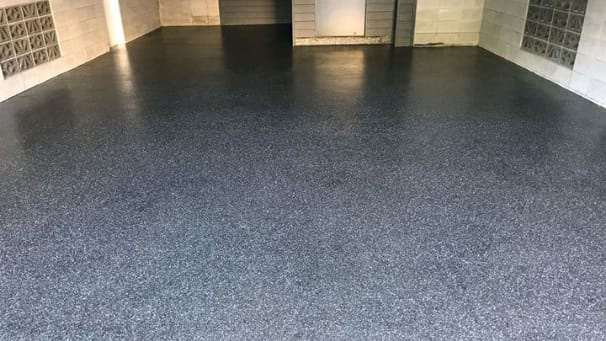
The most-requested screed in Rondebosch. When tiles or damaged screed are removed from Victorian and Edwardian floors, the exposed slab is typically uneven: old mortar ridges, patched areas, settlement variations from a century of use. Self-levelling screed brings the surface to ±3mm flatness in 24 to 48 hours. Ready for colour screed, tiles, epoxy or polished concrete above.
Colour and decorative screed
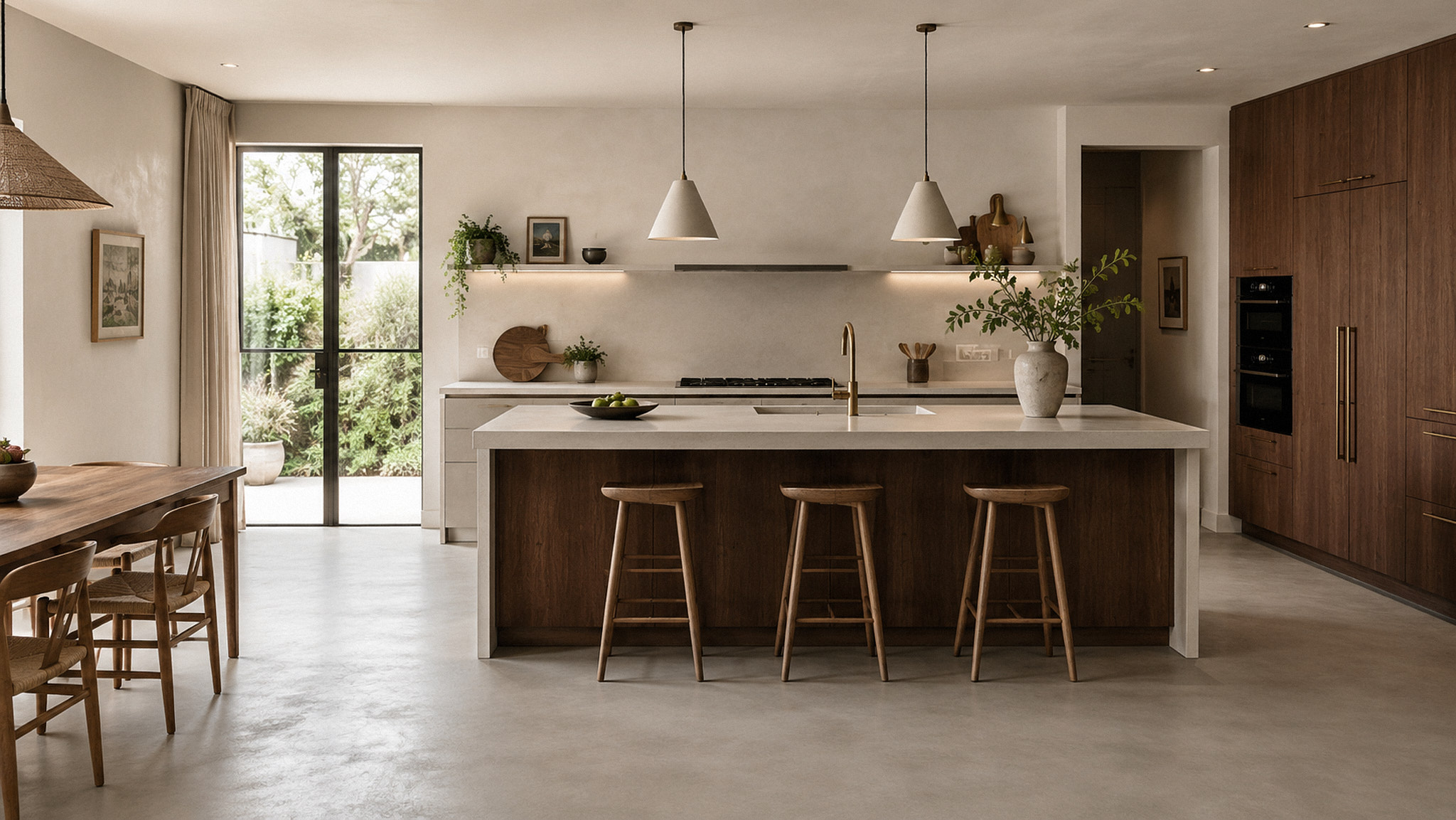
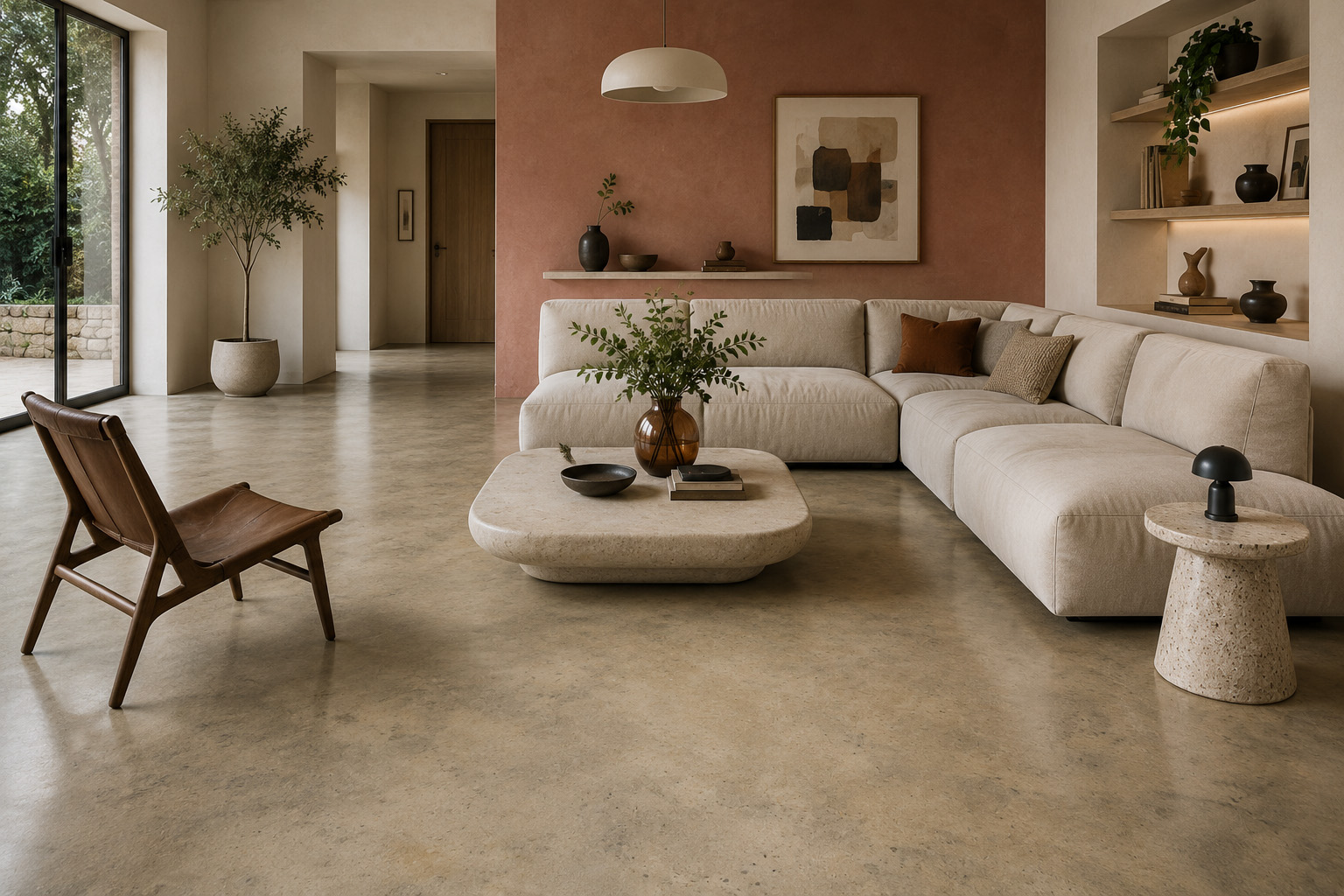
A high-ceilinged Victorian or Edwardian room with a seamless, warm-toned colour screed floor looks exactly as it should. No tile grid cutting across the visual space. No grout lines. Just one uninterrupted surface that complements the architecture. We bring colour samples to every Rondebosch site visit.
Where screed makes the most difference in Rondebosch
Victorian and Edwardian open-plan renovations
When a Rondebosch Victorian home is opened up, kitchen to dining to living area, the floor needs to match the scale of the result. Colour screed delivers a seamless surface across the full open-plan space that tiles simply cannot replicate. The matte or warm satin finish suits heritage proportions naturally. We assess the slab before quoting so the spec is correct before any work begins.
Rental properties near UCT
The UCT main campus sits at the top of Rondebosch, and the streets below it Woolsack Drive, Howard Drive, Rhodes Avenue are some of the most consistently rented in the Southern Suburbs. Landlords managing these properties deal with high tenancy turnover and the floor maintenance that comes with it. A solid colour screed floor eliminates tile replacement and grout repair; one installation that outlasts four to six tenancy cycles without floor maintenance.
Bathroom re-screed and level correction
Rondebosch bathrooms in older homes often have two problems simultaneously: an uneven slab and a drainage fall that no longer works correctly. We re-level and re-screed with the correct fall-to-drain correction. Combined with a seamless colour screed over the correct waterproofing layer, the result eliminates both problems in a single day.
Outdoor stoep and patio
The stoeps on Rondebosch’s generous plots are used year-round. Correctly specified outdoor screed with UV-stable sealer and waterproofing layer handles Cape Town’s seasonal weather without cracking, peeling or becoming slippery in the rain. We specify for Rondebosch’s conditions, which include Liesbeek corridor moisture and the Mountain backdrop’s cold-front wind.
What we find under the floors in Rondebosch, and why it matters
Rondebosch’s oldest homes were built in the 1880s and 1890s. The slabs under these properties are between 90 and 140 years old. In that time, they have been tiled once or twice, painted, repaired with patches of mortar and, in many cases, subjected to moisture from the Liesbeek River corridor that runs through the suburb.
Three things that affect screed installation in these properties:
- Old adhesive and mortar layers. Previous tile adhesive prevents new screed from bonding if not ground out first. We diamond-grind every Rondebosch heritage slab before applying any screed product.
- Liesbeek moisture. Properties within a few hundred metres of the river, particularly between Liesbeek Parkway and the river itself, have elevated moisture levels in their lower-floor concrete. We test every slab before screeding.
- Settlement variations. A slab that has carried a building for a century has minor undulations that show up as level variations. On a large open-plan floor in a high-ceilinged room, these are visible in the finished surface if not corrected. We level before we pour.
None of these are reasons to avoid screed in Rondebosch. They are reasons to have it installed by someone who knows they are there.
Why Rondebosch homeowners choose Solid Tech
We understand heritage slabs, not just new concrete
Most flooring companies have worked primarily on new-build concrete. Rondebosch’s Victorian and Edwardian slabs, with their old mortar layers, previous adhesive, moisture history and settlement patterns, are a different material in a different condition. We assess these slabs correctly during the site visit and include the preparation requirements in the written quote. If another company’s quote is lower, ask what surface preparation is included.
We test for moisture
Liesbeek corridor proximity, heritage slab age and Cape Town’s wet winters create elevated moisture conditions in many Rondebosch properties. We test for moisture on every job as a standard step, not as an optional extra and not after the fact. Skipping the moisture test is how you end up with a delaminating floor six months later. We include the result in the written handover.
We do screed and epoxy
Many Rondebosch renovation projects use screed as a base for an epoxy or polished concrete finish above. We do both: screed the base correctly, then apply the epoxy finish to the correct specification. No separate contractors, no coordination problems between trades, no blaming between two companies if the result is not right. One team, one scope, one guarantee.
Written guarantee on every installation
Written quote before we start. Written specification confirming the screed type, thickness and flatness tolerance. Written handover at completion. Written workmanship guarantee. Every Rondebosch Solid Tech client knows exactly what they agreed to, what was installed and what is covered before, during and after the job.
Four steps, no shortcuts, no surprises
HOW WE INSTALL SCREED FLOORING IN RONDEBOSCH
Every screed job is different. The substrate, the project type, the required finish and the timeline all affect how we work. Here is what the process looks like from start to finish.
01
Free site visit and assessment
We visit your Rondebosch property, assess the slab condition, moisture test and confirm the correct screed type and thickness for your project. You receive a written quote that covers all preparation work identified: old adhesive removal, moisture treatment, levelling. Nothing is added to the invoice after work begins. What is in the quote is what you pay.
02
Substrate preparation
We diamond-grind the concrete to remove old adhesive residue and open the surface for bonding. Where moisture levels are elevated, common in Rondebosch properties near the Liesbeek corridor, we apply a moisture barrier primer before proceeding. Where settlement variations exist, we address them now. This preparation stage is what most competitors skip to reduce their price. It is also the stage that determines whether the floor lasts 15 years or fails in 12 months.
03
Screed application
The screed compound is mixed and applied to the correct thickness and finish. We work to a ±3mm flatness tolerance across the full surface, the specification required by tiling contractors, epoxy applicators and polished concrete finishers to do their work correctly. For Rondebosch’s high-ceilinged heritage rooms, this flatness is also visible from across the room; an uneven floor in a Victorian interior is immediately obvious. We state and deliver the tolerance in writing at handover.
04
Curing and surface protection
We protect the screed surface during the cure period and advise you on what to avoid. Sand and cement screed needs 28 days of proper curing before heavy use, tiling or epoxy application begins. Rushing this step is one of the most common causes of tile adhesion failure in Cape Town properties, particularly when construction timelines push for early access. We give you a written curing guide so there are no misunderstandings on site.
05
Final inspection and handover
At the end of every Rondebosch screed installation, we provide a written handover document confirming: what screed type was installed, the thickness achieved, the flatness tolerance, the moisture test result and the recommended wait time before the next trade moves in. For heritage renovation projects managed by architects or project managers, this document is the confirmation they need before the next phase begins. For homeowners, it is the record that supports the workmanship guarantee.
Where we work in Rondebosch
Rondebosch streets and sub-areas:
Rondebosch Village
Silwood Road area
Woolsack Drive
Howard Drive
Rhodes Avenue
Keurboom Road
The Avenue
Oakhurst Avenue
Milner Road
Campground Road
Liesbeek Parkway
Rondebosch Common area
Claremont Road
Nearby suburbs:
Don’t see your area? Get in touch; we cover more of the Western Cape than we can list here.
Common questions about screed flooring in Rondebosch
Can screed be laid over a 1920s Rondebosch slab?
Yes, with correct preparation. 1920s slabs in Rondebosch typically carry old tile adhesive, paint residue and minor settlement variations. We diamond-grind through these layers to reach clean concrete before applying any screed. We also test for moisture; Liesbeek corridor proximity means many Rondebosch slabs have elevated moisture that must be treated before screeding. Prepared correctly, a 1920s slab accepts screed as well as any modern slab.
Is colour screed right for a Victorian or Edwardian Rondebosch interior?
It is one of the best choices. The scale of Victorian and Edwardian rooms, high ceilings, and generous proportions suit a seamless screed floor naturally. No tile grid breaking up the floor plane. No grout lines. A warm matte or satin finish in the right tone reads as an extension of the original architecture rather than a surface laid on top of it. We bring samples to every Rondebosch site visit so you choose in your own light and space.
Is screed a good investment for a UCT area rental property in Rondebosch?
Yes, it is one of the most practical investments for Rondebosch landlords near UCT. Tile maintenance costs in student rental properties are consistently high; cracked tiles, failed grout and repainting between tenants add up across multiple cycles. A correctly installed screed floor eliminates all of this. One installation outlasts four to six tenancy cycles with no floor maintenance. For properties on Woolsack Drive, Howard Drive and the UCT corridor, the payback period is typically under two years.
Does the Liesbeek River affect screed in Rondebosch?
Yes, in specific parts of the suburb. Properties close to the Liesbeek Parkway and the river corridor can have elevated moisture levels in lower-floor slabs, the result of seasonal moisture from the river and the mountain slopes above Rondebosch. We test every slab on site. Where moisture exceeds the safe threshold, we apply a moisture-tolerant barrier primer before screeding. This is included in the written quote and is non-negotiable in the affected parts of Rondebosch.
How long does screed installation take in a Rondebosch home?
Self-levelling screed in a single room or kitchen takes one day walkable in 3 to 4 hours, ready for the next finish in 24 to 48 hours. Colour screed across an open-plan renovation takes one to two days. Heritage jobs with significant slab preparation may require an additional half-day for grinding and moisture treatment, which we confirm in the written quote before starting. Full sand-and-cement screed for a new base takes one to two days but requires 28 days of curing before tiling.
Do you cover all of Rondebosch including areas near UCT?
Yes. We work across all of Rondebosch, the Village, the Silwood Road area, Woolsack Drive and Howard Drive near UCT, the Liesbeek Parkway corridor, the Common area and all streets in between. We also serve Newlands, Claremont, Bishopscourt, Mowbray, Observatory, Rosebank, Kenilworth, Wynberg, Pinelands and Plumstead.
