Colour Screed Flooring in Cape Town
A colour screed floor is one of the most sought-after finishes in Cape Town home design right now. Seamless, durable and completely maintenance-free
Free Site Visit * No Obligation Quote
Workmanship guarantee on every job
Serving all of Cape Town & Western Cape
10+ years of installation experience
Free site visit — available this week
What is colour screed flooring?
Colour screed is a decorative, pigmented screed applied at 3 to 8mm thickness that becomes the finished floor. Unlike traditional screed, which is a base layer that something else goes on top of, colour screed is the final surface. It is what you see, walk on and live with every day.
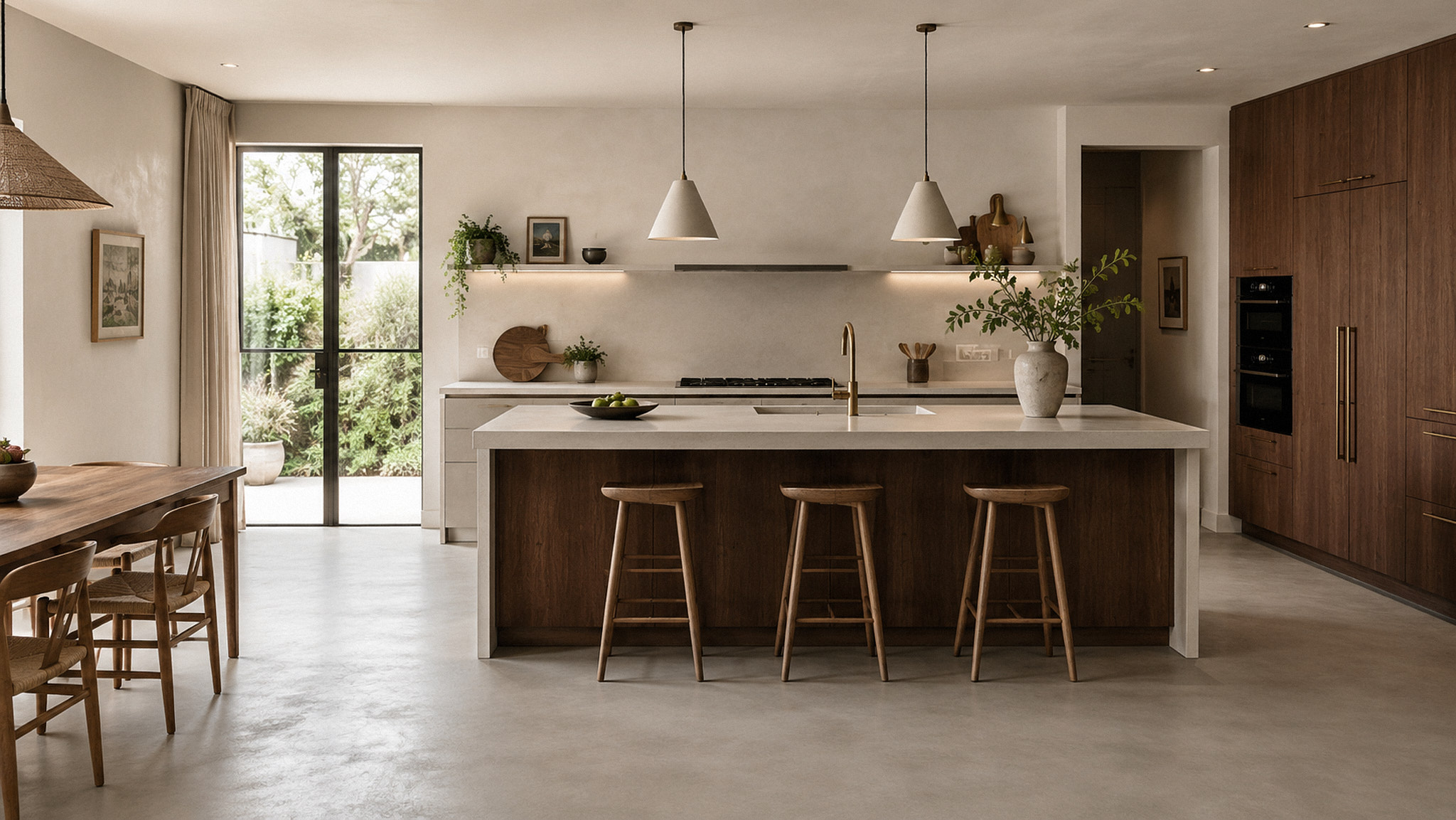
The appeal in Cape Town is easy to understand. The suburb is built around open-plan living, indoor-outdoor flow and minimal, architectural interiors. Colour screed delivers a seamless, joint-free floor that suits this aesthetic perfectly. No tile grids cutting up the visual flow. No grout lines to clean. No edges between rooms. Just one continuous surface from the kitchen to the living area to the stoep.
It suits Cape Town’s most popular interior design styles from the warm, trowelled finishes in Constantia farmhouse renovations to the cool grey polished floors of Atlantic Seaboard apartments. It is applied by hand, cured, then sealed. And once sealed, it is one of the easiest floors in existence to maintain.
Colour screed finishes
Colour screed is not one look. The finish you choose and how the screed is applied and sealed completely changes the character of the floor. Here are the four most popular finishes we install across Cape Town.
Polished screed
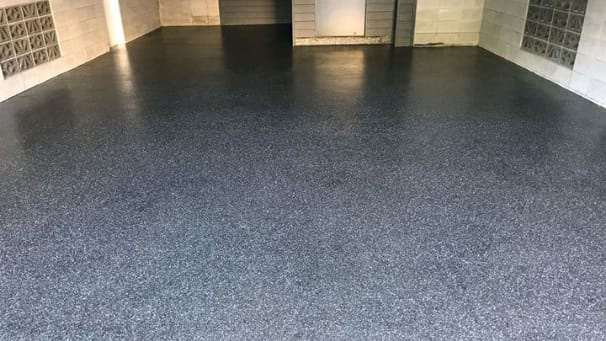
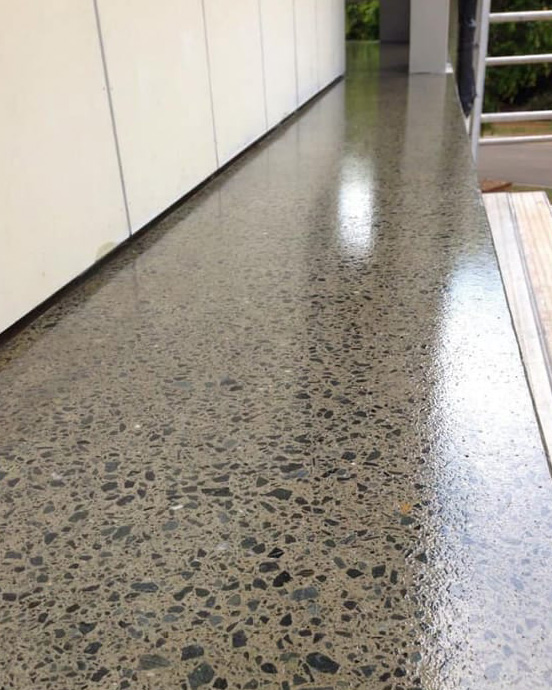
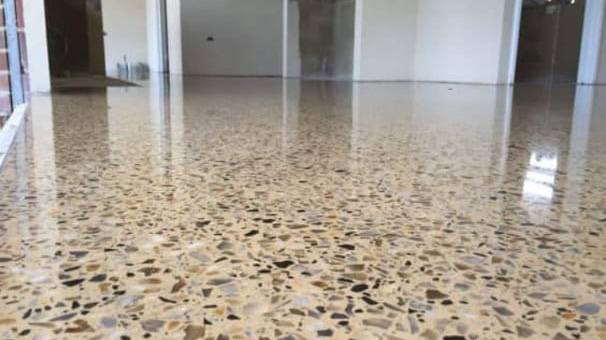
Polished screed is trowelled smooth and then sealed to a high-gloss finish. The surface reflects light and makes a room feel larger and brighter. It works particularly well in Atlantic Seaboard apartments and open-plan living areas where natural light plays across the floor throughout the day. Every polished screed floor has a slightly different character depending on how the trowel moves; no two floors look the same.
Matte and satin screed
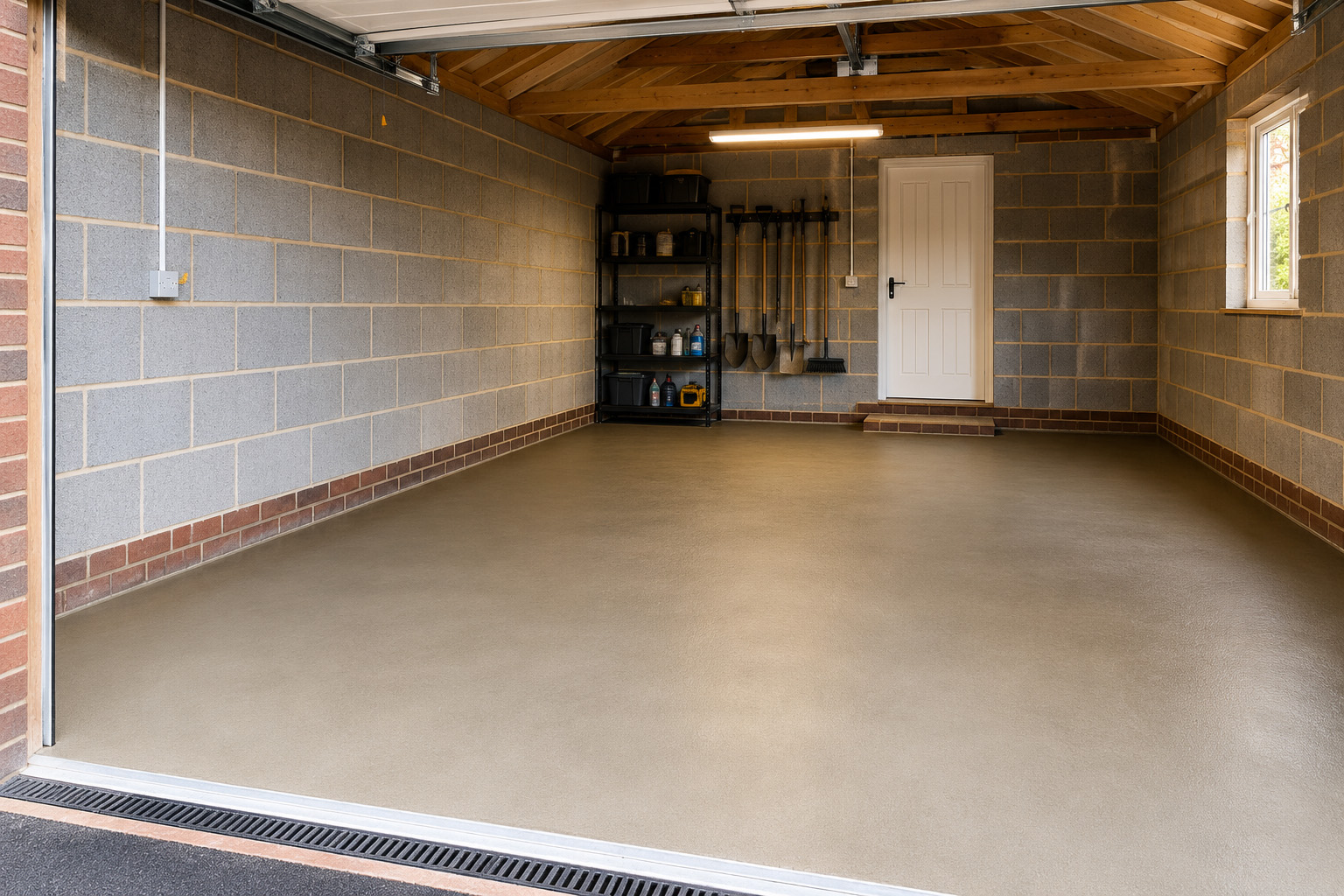
A matte or satin seal gives colour screed a softer, more restrained finish. The floor still has the seamless quality of screed but without the reflective sheen. This is the most popular finish we install in Southern Suburbs family homes in Constantia, Bergvliet, Newlands, Rondebosch, where the brief is warmth and livability rather than visual drama. It works in any room and suits both modern and heritage home interiors.
Trowelled screed
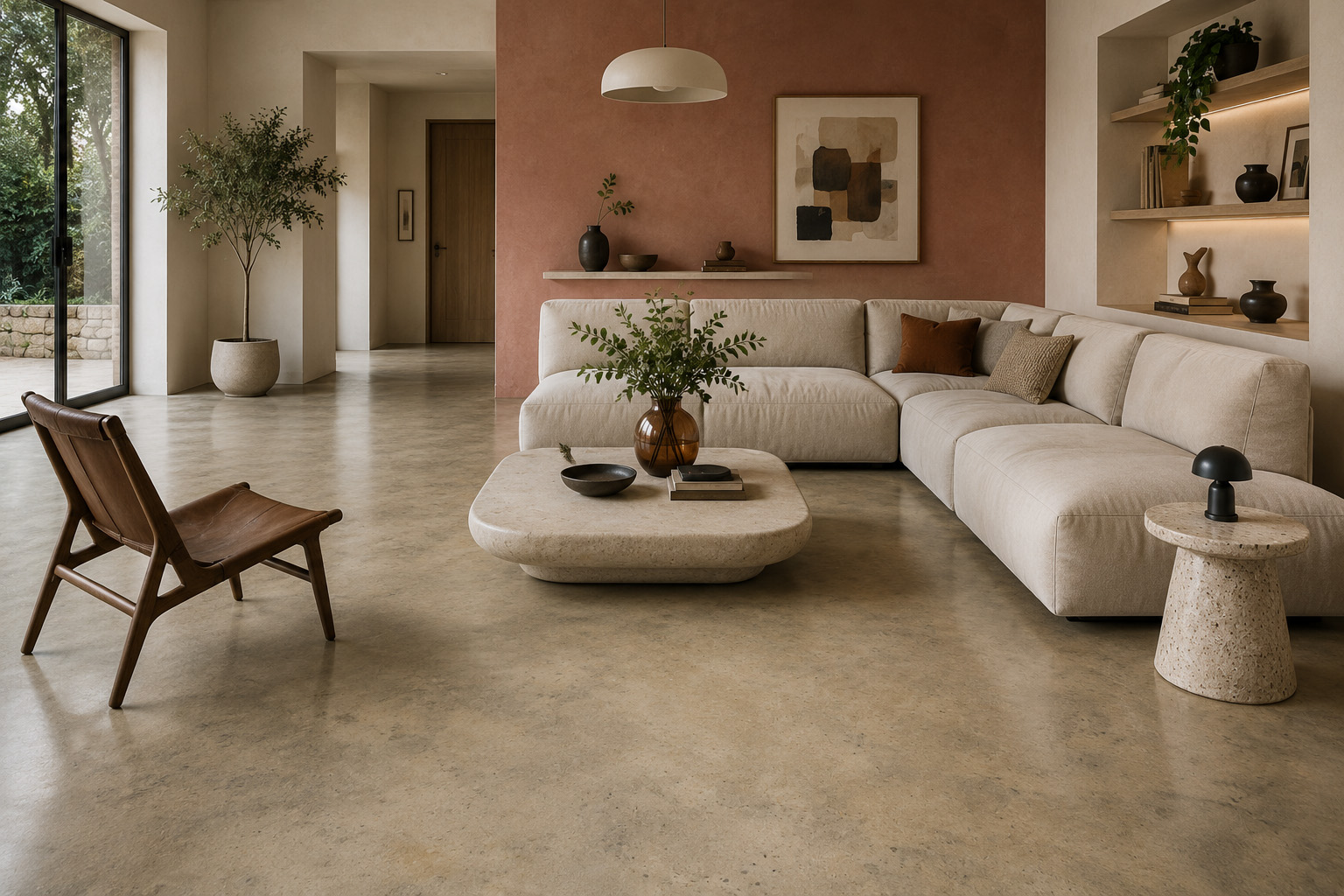
A trowelled finish preserves the natural marks left by hand application: slight tonal variation, visible movement in the surface, the texture of a floor made by a craftsman rather than a machine. This finish suits heritage homes, farmhouse-style renovations and interiors where imperfection is part of the design intention. It is especially popular in Hout Bay, Stellenbosch and the Constantia Valley where the architectural character calls for something with warmth and story.
Anti-slip colour screed
Colour screed can be applied to outdoor stoeps, patios and wet rooms with an anti-slip aggregate in the topcoat. The visual finish is the same as an indoor screed: seamless and clean, but the surface provides real grip when wet. For Cape Town outdoor areas that face winter rain and coastal weather, this system is what we use as standard. It removes the dividing line between an indoor polished floor and an outdoor stoep.
Colour screed colours
Colour screed is available in dozens of standard tones and can be mixed to custom specifications for larger or more specific projects. The most popular tones for Cape Town residential projects are:
Warm neutrals
Sandy creams, warm whites and soft beiges. These are the most popular for Southern Suburbs family homes and Constantia-area properties where the interior palette trends toward warmth and natural materials.
Cool greys
Light grey, mid grey, slate and charcoal. Dominant in Atlantic Seaboard apartments, Century City townhouses and modern new builds where the design brief is clean, architectural and contemporary.
Earthy tones
Burnt sienna, clay, ochre and terracotta. Less common but increasingly requested in Hout Bay and Stellenbosch properties where the setting and architecture call for something connected to the landscape.
Dark tones
Graphite, dark charcoal and near-black. Used as statement floors in smaller feature spaces, entrance halls, home bars, guest bathrooms rather than across large open-plan areas.
How we choose with you:
We bring physical colour samples to every Solid Tech site visit in Cape Town. We view the colours in your actual lighting, against your walls and fittings, and in the natural light of your specific aspect. A sample board in a showroom looks different from a sample in your home, which is why we always bring them to you.
Where we install colour screed in Cape Town homes
Colour screed is available in dozens of standard tones and can be mixed to custom specifications for larger or more specific projects. The most popular tones for Cape Town residential projects are:
Open-plan kitchens and living areas
The most popular application for colour screed in Cape Town. A seamless floor that flows from kitchen island to lounge to dining area with no joints, no grout lines and no level changes creates exactly the indoor continuity that Cape Town’s open-plan architecture demands. Colour screed in a warm neutral reads as a natural extension of the home, not a floor covering sitting on top of it.
Entrance halls and passages
An entrance hall sets the tone for the whole house. Colour screed in an entrance, particularly a polished or high-satin finish, creates a first impression that tiles and vinyl cannot match. It photographs brilliantly, which matters for Cape Town properties in the rental and resale market. And it holds up to the traffic that an entrance takes better than almost any other residential floor material.
Bathrooms and wet rooms
Colour screed in a bathroom creates the seamless, grout-free wet room look that Cape Town renovation clients increasingly request. Applied with the correct waterproofing layer beneath it and anti-slip aggregate in wet zones, it is fully functional in wet rooms and dramatically reduces the mould and maintenance issues that tiled bathrooms generate over time.
Outdoor stoeps and patios
With a UV-stable sealer and anti-slip aggregate, colour screed can be taken from an indoor kitchen directly onto an outdoor stoep in the same tone and finish. This indoor-outdoor continuity is one of the defining features of Cape Town’s current interior design moment, and colour screed is one of the few materials that can actually deliver it.
Home studios, gyms and ancillary spaces
Colour screed works equally well in home studios, converted garages turned gyms, garden offices and any ancillary space where the brief is functional, easy to clean and better-looking than bare concrete.
Why Cape Town homeowners choose Solid Tech for colour screed
Screed and epoxy specialists
We only install screed and epoxy floors. We do not do painting, tiling, general building work or any other trade. This focused expertise means our colour screed installation team has spent years on this specific product, the application technique, the colour mixing, the sealing sequence. Colour screed finished to a high standard requires a skilled, experienced hand. That is what we bring.
We bring colour samples to your home
We come to your property with samples for every site visit. You choose your colour in your own space, against your own walls, in your own natural light and at your own time of day. A swatch that looks right in a showroom under fluorescent lighting can look completely different in a south-facing Constantia kitchen in the afternoon. We have seen it too many times to not fix it at the sample stage.
We prepare the substrate correctly before any screed goes down
Colour screed applied to a poorly prepared surface cracks, lifts and delaminates. We assess the existing floor, identify any preparation requirements and include all of this in the written quote before we start. There are no surprises on the invoice.
Written guarantee on every installation
Every Solid Tech colour screed floor comes with a written workmanship guarantee. If the floor cracks, delaminates or fails due to our installation, we come back and fix it. That is written into every job agreement, no exceptions.
What to expect
How we install colour screed flooring in Cape Town
Colour screed installation is a skilled process. The finish is applied by hand, and the result depends on the skill of the applicator, the correct preparation of the substrate and the right choice of sealer for the space and use.
01
Free site visit and colour consultation
We come to your Cape Town property, look at the existing substrate, assess what preparation is needed, and bring colour samples. We talk through finish options: polished, matte, trowelled, anti-slip, and you choose in your own space, with your own light. You leave with a written quote.
02
Substrate preparation
The existing surface must be sound, flat and clean before colour screed is applied. For renovation projects, we remove old tiles or adhesive residue, prime the substrate and level any major undulations. The quality of the preparation directly determines the quality of the finished floor; we do not cut corners here.
03
Colour screed application
The pigmented screed compound is hand-applied in layers using a trowel. Depending on the finish polished, matte or trowelled the application technique and number of passes vary. For polished finishes, we achieve a specific surface smoothness before sealing. For trowelled finishes, the movement in the surface is part of the design intention and is achieved during application.
04
Curing period
Colour screed needs a curing period before sealing, typically 24 to 48 hours at standard Cape Town temperatures. During the winter months in the Western Cape, this period may extend due to cold, damp conditions. We advise on the correct curing time for your specific installation and protect the surface during this period.
05
Sealing and handover
Once cured, the floor is sealed with the correct polyurethane or penetrating sealer for the finish and application type. For wet rooms and outdoor areas, waterproof sealers are used. We do a final inspection and walk you through the care instructions before we leave. A colour screed floor that is sealed and maintained correctly will look the same in year ten as it did on installation day.
Colour screed flooring across Cape Town and the Western Cape
We install colour screed floors in homes and businesses across Cape Town and the Western Cape, from Atlantic Seaboard apartments to Southern Suburbs family homes to Stellenbosch wine estates.
Areas we serve:
Constantia
Atlantic Seaboard
Camps Bay
Sea Point
Hout Bay
Century City
Claremont
Kenilworth
Newlands
Rondebosch
Bergvliet
Plumstead
Wynberg
Bellville
Durbanville
Brackenfell
Bloubergstrand
Table View
Milnerton
Goodwood
Pinelands
Stellenbosch
Somerset West
Paarl
Don’t see your area? Get in touch; we cover more of the Western Cape than we can list here.
Common Questions on Colour screed flooring in Cape Town
Is colour screed the same as microcement?
They are similar but not the same product. Both are thin-layer, trowelled, cement-based finishes. Microcement typically uses a polymer-modified cement compound applied at 1–3mm — thinner than colour screed and more flexible. Colour screed is typically a cementitious compound applied at 3–8mm. Both give a similar seamless, polished concrete aesthetic and are often confused by homeowners. We can advise on which is the right product for your specific surface and finish requirement during the site visit.
How long does colour screed last?
A properly installed, sealed colour screed floor lasts 15 to 20 years with basic care. The sealer needs to be reapplied every 3 to 5 years in high-traffic areas a simple process that refreshes the surface and extends its life significantly. The screed itself does not wear out; it is the sealer that takes the daily abrasion. A re-seal is a fraction of the cost of a floor replacement.
Is colour screed suitable for Cape Town bathrooms?
Yes, with the correct waterproofing layer beneath it and the right sealer on top. Colour screed in a bathroom gives you a seamless, grout-free surface with no joins for moisture or mould to penetrate. The floor-to-wall continuity creates the wet room look that Cape Town interior designers increasingly specify. We install waterproofing as standard on all bathroom colour screed applications and use penetrating sealers rated for continuous wet exposure.
How do you maintain a colour screed floor?
Colour screed is one of the easiest floors to maintain. Sweep regularly to remove grit; fine particles are the main cause of surface wear over time. Mop with warm water and a pH-neutral cleaner. Avoid harsh chemicals, bleach and acid-based cleaners — these degrade the sealer. The sealer needs to be refreshed every 3 to 5 years in high-traffic areas using the same product originally applied. We give you written care instructions and the specific sealer product reference at handover.
How is colour screed different from a standard screed base layer?
Standard screed is a base layer; it creates a flat surface for tiles, vinyl, epoxy or polished concrete to go on top of. Colour screed is a finished floor; it is the final surface you see, walk on and live with. The two products use similar raw materials but have different thicknesses, different application techniques, different surface finishes and completely different purposes. You would not install colour screed as a base for tiles. You would not try to use a base layer screed as a finished floor.
